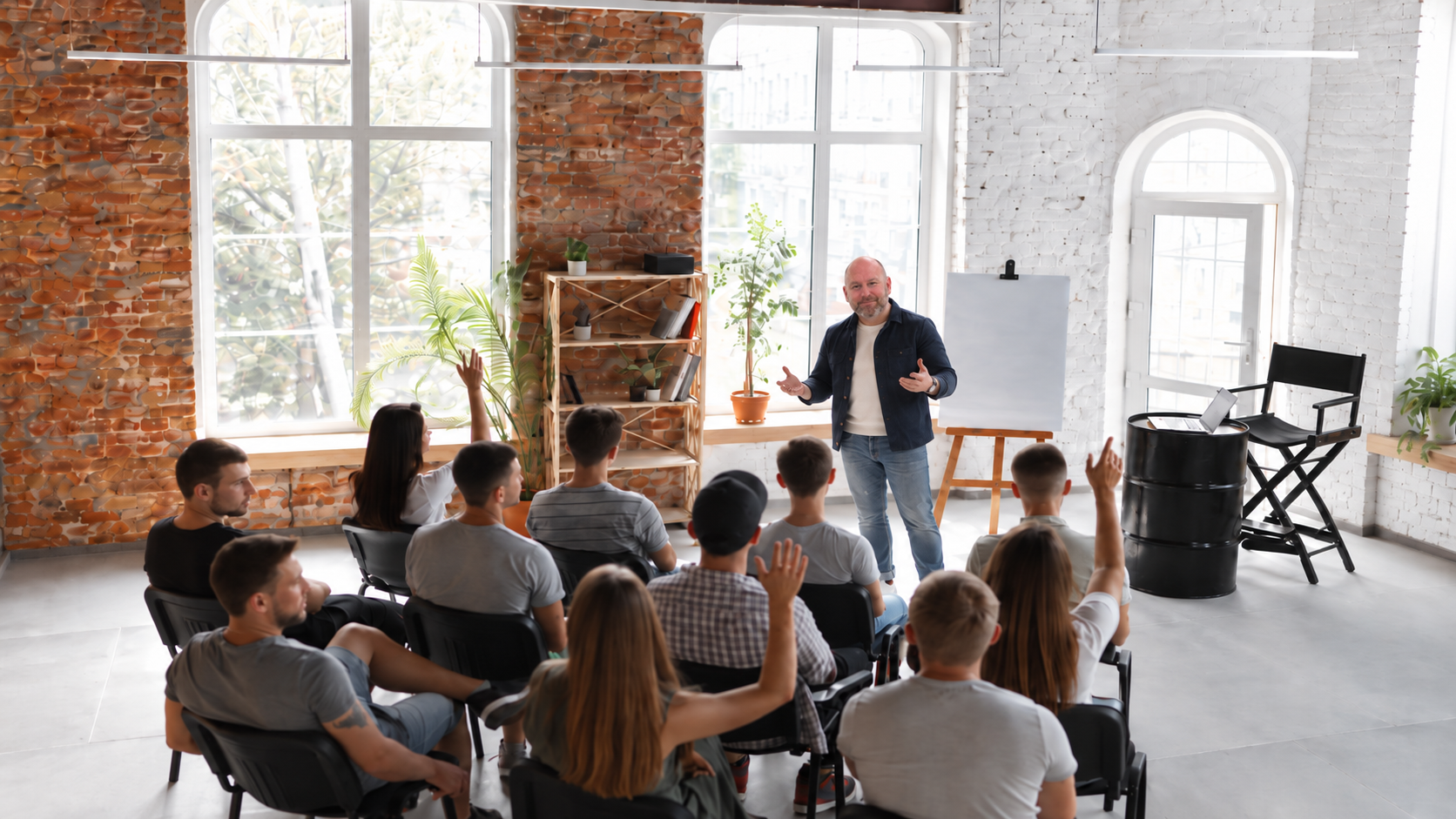

Neurodiversity Training ↓
Understand different minds. Make inclusion feel natural.
Training should do more than explain terminology.
We help people understand neurodiversity in a clear, human way, then turn that understanding into confidence, better decisions and everyday actions that remove barriers and enable people to thrive.


Understanding, changes what happens next.
Neuroinclusion becomes more meaningful when people understand not just what neurodiversity is, but what different experiences can feel like and how environments, communication and everyday decisions can help or hinder.
Our training gives people enough knowledge to make a difference without overwhelming them with information.
We make complex subjects understandable, relevant and human.
No academic lecture.
No list of stereotypes.
No expectation that one adjustment works for everyone.
Instead, we build understanding, confidence and capability so that neuroinclusion can become warmer, more natural and less forced.

Awareness is the beginning. Confidence changes things.
Why it matters
People can want to be inclusive and still hesitate.
People can want to be inclusive and still hesitate.
They may worry about saying the wrong thing. They may recognise a difference but not know what to do next. Or a process that appears perfectly reasonable may create an unnecessary barrier for somebody experiencing it differently.
Good training helps close that gap.
It gives people the confidence to:
Notice barriers earlier.
Ask better questions.
Have more comfortable conversations.
Recognise individual strengths.
Challenge assumptions and stereotypes.
Adapt communication and experiences.
Respond rather than presume.
Make inclusion part of everyday thinking.
The aim is not to make everyone an expert in neurodivergence.
It is to help people become more confident with difference.
NEUR!TIDE training shaped around your needs
Whether your needs are based on job role, industry or you would like a focussed session about particular neurodifferences or maybe learn about communication and neurodiversity, we have the expertise to develop your team.

Cohort focussed ↗︎
NEUR!TIDE’s cohort focussed neurodiversity training sessions.
First, understand.
Part 01
Part 1 provides the common foundation across our core neurodiversity training.
We introduce neurodiversity as a paradigm for understanding natural differences between human minds before exploring some of the neurodifferences people are most likely to encounter.
The emphasis is on understanding people rather than memorising diagnostic criteria.
Clear enough to remember.
Detailed enough to be useful.
Human enough to connect.
What we explore
A wider understanding of neurodiversity, individual experience and the conditions that can help people work at their best.
Neurodiversity
We introduce the neurodiversity paradigm and why differences in the way people think, process, communicate, focus, learn, regulate and experience the world should not automatically be viewed through a deficit lens.
The language is straightforward and the science is translated into something people can actually use.
ADHD
We explore differences that may relate to attention, regulation, executive functioning, working memory, motivation, impulsivity, energy and interest.
Alongside areas of friction, we consider the strengths and capabilities that can emerge in the right circumstances.
Autism
We explore differences that may relate to communication, social interaction, sensory processing, predictability, information processing, focus and patterns of interest.
We also challenge assumptions and stereotypes that can prevent autistic people from being properly understood.
AuDHD
We explore the experience of being both autistic and ADHD and why the interaction between the two can create experiences that cannot always be understood by simply considering autism and ADHD separately.
Dyslexia
We look beyond spelling.
We explore differences associated with written language, processing, working memory, organisation and information, alongside the abilities, thinking styles and perspectives that may accompany dyslexia.
Dyscalculia
We explore differences relating to numbers, quantity, sequencing, time and numerical information, and why seemingly simple number-based tasks or systems can create unexpected friction.
Dyspraxia
We explore coordination and movement alongside the broader ways dyspraxia can influence organisation, planning, processing, communication and everyday experiences.
Tics + Tourette's
We introduce tics and Tourette's in a way that moves beyond stereotypes.
We explore motor and vocal tics, fluctuating experiences and the effect that environment, attention, stress and social responses can have on somebody's experience.
Sometimes the barrier isn't the person.
The social model of disability gives us another way of looking at inclusion.
Rather than asking only what somebody cannot do, we explore what happens when the environment, process, communication or expectation around them creates unnecessary friction.
Change the barrier and the experience can change too.
That distinction runs throughout Neuro Tide training.
Because neuroinclusion is not about pretending challenges do not exist.
It is about understanding challenges accurately while making space for talent, capability and different ways of thinking to shine.
What participants take from Part 1.
Learning outcomes
By the end of Part 1, participants will have developed:
- A clear understanding of neurodiversity.
- A human understanding of the core neurodifferences explored.
- Greater awareness of how neurodifferences can overlap.
- Understanding of individual variation within neurodifferences.
- Awareness of common misconceptions and stereotypes.
- Greater understanding of strengths as well as challenges.
- Awareness of environmental and systemic barriers.
- Understanding of the social model of disability.
- Greater confidence talking about neurodiversity.
Participants will be able to
- Describe neurodiversity in clear everyday language.
- Recognise that the same neurodifference can look very different between people.
- Avoid relying on simplistic stereotypes.
- Consider strengths alongside areas of difficulty.
- Identify where an environment or experience may be creating friction.
- Approach conversations about neurodivergence with greater confidence.
- Ask rather than assume.
- Recognise when a different approach could create a better experience.
A stronger foundation
Participants leave Part 1 with a clearer, more human understanding of neurodiversity and greater confidence to turn that understanding into more thoughtful everyday decisions.
It creates the foundation for the more specific application, discussion and action that follows.

Then make it relevant.
Part 02
Understanding becomes useful when we connect it to real life.
Part 2 changes according to who is in the room.
We explore how the neurodifferences introduced in Part 1 may interact with the situations, responsibilities, environments and experiences that participants encounter.
Then we look at what can change.
Not a rigid list of things to do.
Better principles.
Better questions.
Better choices.
Managers
Make everyday management work for different minds.
Managers can have an enormous influence on whether somebody encounters unnecessary friction or has the conditions they need to perform well.
Where we focus
Communication
Meetings & change
Expectations & clarity
Feedback & performance
Workload & executive functioning
Adjustments & strengths
The shift
Better management does not mean lower expectations. It means removing unnecessary friction around them.
Leadership
Turn understanding into organisational behaviour.
Leaders shape the environments in which inclusion either becomes possible or gets stuck.
Where we focus
Culture & behaviour
Policy & decisions
Systems & processes
Accessibility by design
Communication & change
Listening & accountability
The shift
Neuroinclusion becomes credible when it changes decisions, systems and everyday behaviour.
Colleagues
Work better together without everyone needing to work the same way.
Different minds can communicate, organise, process and respond differently. That difference does not need to become friction.
Where we focus
Communication
Attention & focus
Processing
Sensory experience
Collaboration
Assumptions & strengths
The shift
People do not need to work in the same way to work well together.
Recruiters & talent acquisition
Make it easier for talent to be seen.
Recruitment should assess somebody's suitability for a role rather than how successfully they navigate unnecessary barriers in the recruitment process.
Where we focus
Candidate communication
Processing & assessment
Job information
Adjustments
Interviews
Capability
The shift
The goal is not to make recruitment easier. It is to make capability easier to see.
Sports coaches
Create the conditions for different athletes to perform.
How instructions are given, sessions are structured and feedback is delivered can significantly change how neurodivergent athletes experience and access coaching.
Where we focus
Instructions & demonstration
Sensory experience
Attention & processing
Feedback & regulation
Structure & transitions
Strengths & adaptation
The shift
Inclusive coaching does not reduce ambition. It creates more ways for athletes to access it.

Ask what you actually want to ask.
Part 03
Every session includes space for questions.
Sometimes the Q&A lasts ten minutes.
Sometimes it becomes the most valuable hour of the session.
We do not shut down a useful conversation because a slide says we have reached the end.
Participants can explore situations they have encountered, things they have wondered about, language they are unsure of or questions they may not previously have felt confident asking.
There is no expectation that somebody already knows the “right” terminology.
The purpose is to learn.
Because sometimes the question is where the real learning starts.

Need more of an in-depth session on a particular topic.
Our core sessions have been designed to give you plenty of detail and practical takeaways, but sometimes we recognise that you might want to tap in to our speciality with more depth.

Neuroinclusive communication
Focussed training
Make communication work for different minds.
Communication is one of the most common places where neurodivergent people encounter unnecessary friction.
This session explores how different neurotypes may receive, process, interpret, retain and communicate information differently, and what organisations, teams and individuals can do to make communication more accessible without losing meaning, detail or purpose.
The emphasis is not on teaching neurodivergent people to communicate more typically.
It is on creating communication that works better between different minds.
Understand neurodivergent communication.
We introduce the core neurodifferences through the lens of communication and explore how different experiences may influence the way information is shared, received and understood.
We explore strengths as well as areas of difficulty, including precision, directness, depth, creativity, pattern recognition, detailed knowledge and different ways of expressing ideas.
Content includes
- Neurodiversity and communication.
- ADHD and communication.
- Autism and communication.
- AuDHD and communication.
- Dyslexia and written information.
- Dyscalculia and numerical information.
- Dyspraxia and communication.
- Tics and Tourette's.
- Spoken and written communication.
- Processing time.
- Working memory.
- Attention.
- Clarity and ambiguity.
- Literal and inferred meaning.
- Social communication.
- Sensory and cognitive load.
- Communication strengths.
- Individual preferences.
- Common sources of misunderstanding.
Make communication more neuroinclusive.
We explore how communication barriers may appear in the audience's own environment and what practical changes can improve access, understanding and participation.
Depending on the audience, we may explore
- Clearer instructions.
- Explicit expectations.
- Reducing unnecessary ambiguity.
- Structuring information.
- Processing time.
- Written follow-up.
- Visual information.
- Meetings.
- Email.
- Messaging.
- Telephone communication.
- Video calls.
- Presentations.
- Feedback.
- Communicating change.
- Asking questions.
- Checking shared understanding.
- Alternative ways to respond.
- Communication preferences.
- Reducing information overload.
- Retaining meaning across different formats.
Create communication that works between different minds.
Participants leave with greater confidence recognising where communication friction may occur and adapting how information is shared without patronising, oversimplifying or lowering expectations.
Participants leave better able to
- Understand how neurodivergence can influence communication.
- Recognise communication strengths as well as barriers.
- Identify where meaning or information may become lost.
- Communicate expectations more clearly.
- Make written and spoken information easier to process.
- Reduce unnecessary ambiguity.
- Make meetings and digital communication more accessible.
- Give people different ways and time to respond.
- Check understanding respectfully.
- Adapt communication without patronising or oversimplifying.
- Create communication that works better between different minds.
ADHD
Focussed training
Understand ADHD. Reduce friction. Enable strengths.
A focused session exploring ADHD through a practical, neuroaffirming lens.
Participants develop a clear understanding of how ADHD can influence everyday experiences, performance, communication and wellbeing, while also exploring the strengths, capabilities and ways of thinking that may emerge when the right conditions are in place.
The session moves beyond stereotypes to consider the interaction between the individual, their environment and what they are being asked to do.
Understand the experience.
We build a clear, human understanding of ADHD and explore the practical realities of how it can affect different people.
Content includes
- A clear introduction to ADHD.
- Individual variation.
- Attention and regulation.
- Executive functioning.
- Working memory.
- Motivation and interest.
- Energy and consistency.
- Communication.
- Sensory experiences.
- Strengths and capabilities.
- Challenges and areas of friction.
- Masking and compensating.
- Overlapping neurodifferences.
- The influence of environment and context.
- Common assumptions and stereotypes.
Turn understanding into better experiences.
We apply that understanding to the audience's own environment and explore where barriers may appear, what practical changes may help and how strengths can be better enabled.
Depending on the audience, we may explore
- Clearer expectations and priorities.
- Task and workload design.
- Communication.
- Meetings.
- Instructions.
- Planning and organisation.
- Changing priorities.
- Processing time.
- Focus and distraction.
- Environmental considerations.
- Feedback.
- Flexibility.
- Workplace adjustments.
- Strengths-based approaches.
- Individual ways of working.
Turn insight into everyday confidence.
Participants leave with a more rounded understanding of ADHD and greater confidence applying that understanding in everyday situations.
Participants leave better able to
- Understand ADHD beyond stereotypes.
- Recognise strengths as well as challenges.
- Identify common sources of friction.
- Recognise when the environment may be creating barriers.
- Communicate more effectively.
- Consider practical adjustments and alternatives.
- Support individual ways of working.
- Create better conditions for capability and strengths to show.
Autism
Focussed training
Understand autistic experience. Create better conditions.
A focused session exploring autism in a clear, human and neuroaffirming way.
Participants develop a more confident understanding of autistic experience, including the strengths, challenges, sensory and communication differences, environmental friction and individual variation that may shape somebody's day-to-day experience.
The session moves away from stereotypes and towards understanding the person in context.
Build a more human understanding.
We explore autism as an individual experience rather than a fixed set of characteristics.
Content includes
- A clear introduction to autism.
- Individual variation.
- Communication.
- Sensory experiences.
- Processing.
- Predictability and change.
- Social experiences.
- Attention and deep focus.
- Strengths and capabilities.
- Challenges and friction.
- Masking and effort.
- Energy and recovery.
- Overlapping neurodifferences.
- Environmental barriers.
- Assumptions and stereotypes.
Apply that understanding.
We explore how autistic experiences may interact with the situations relevant to the audience and what practical changes can reduce barriers while enabling individual strengths.
Depending on the audience, we may explore
- Communication clarity.
- Expectations.
- Processing time.
- Meetings.
- Sensory environments.
- Change and transitions.
- Predictability.
- Workload.
- Feedback.
- Social expectations.
- Flexibility.
- Workplace adjustments.
- Different ways to participate.
- Individual preferences.
- Enabling specialist strengths.
Turn understanding into more inclusive experiences.
Participants leave with greater confidence recognising where barriers may appear and creating conditions that work better for different autistic experiences.
Participants leave better able to
- Understand autism beyond common stereotypes.
- Recognise individual variation.
- Identify potential communication and sensory barriers.
- Recognise strengths alongside areas of difficulty.
- Make environments and expectations clearer.
- Approach change more inclusively.
- Consider adjustments confidently.
- Create better conditions for autistic capability to show.
AuDHD
Focussed training
Understand the overlap. Make sense of competing needs.
A focused session exploring ADHD, autism and the experience of being both ADHD and autistic.
Participants first develop a clear understanding of ADHD and autism before exploring how characteristics associated with both may overlap, interact or create apparently competing needs.
The emphasis is on understanding the whole person rather than treating AuDHD as two separate checklists.
Understand ADHD, autism and the interaction between them.
We explore the practical realities of AuDHD, including the strengths, challenges, tensions and individual variation that may arise when ADHD and autistic experiences coexist.
Content includes
- ADHD.
- Autism.
- AuDHD.
- Overlapping experiences.
- Apparently competing needs.
- Attention and deep focus.
- Routine and novelty.
- Planning and organisation.
- Communication.
- Sensory experiences.
- Energy and regulation.
- Masking and compensation.
- Strengths and capabilities.
- Challenges and friction.
- Environment and context.
- Individual variation.
Turn complexity into useful support.
We apply that understanding to the audience's environment and explore what can help when different needs interact.
Rather than searching for one “AuDHD solution”, we consider how flexibility, clarity, choice and individual approaches can reduce friction.
Depending on the audience, we may explore
- Structure and flexibility.
- Routines and unexpected change.
- Task initiation.
- Transitions.
- Workload.
- Communication.
- Meetings.
- Sensory environments.
- Planning and organisation.
- Competing demands.
- Processing time.
- Autonomy.
- Adjustments.
- Energy and regulation.
- Recognising and enabling strengths.
Respond to the person, not a formula.
Participants leave with greater confidence understanding how different needs may interact and exploring approaches that work with the individual rather than relying on one fixed solution.
Participants leave better able to
- Understand ADHD, autism and AuDHD distinctly.
- Recognise how ADHD and autistic experiences may interact.
- Understand apparently competing needs.
- Recognise strengths alongside challenges.
- Identify barriers and friction.
- Avoid overly simplistic solutions.
- Explore support collaboratively.
- Create conditions that better enable individual capability.
Positive. Practical. Realistic.
Our focused training does not present neurodivergence as either a collection of deficits or a collection of superpowers.
It explores the whole experience.
Strengths and capability.
Challenges and needs.
Friction and barriers.
Environment and context.
Individual difference.
Participants leave with greater understanding, greater confidence and practical ways to make environments, communication and everyday experiences work better for different minds.

Whether you are developing managers, leaders, recruiters, colleagues, coaches or a wider organisation, we can shape training around the people, environments and experiences that matter to you.